Green Packaging 2.0: Why Is the Future Taking So Long?
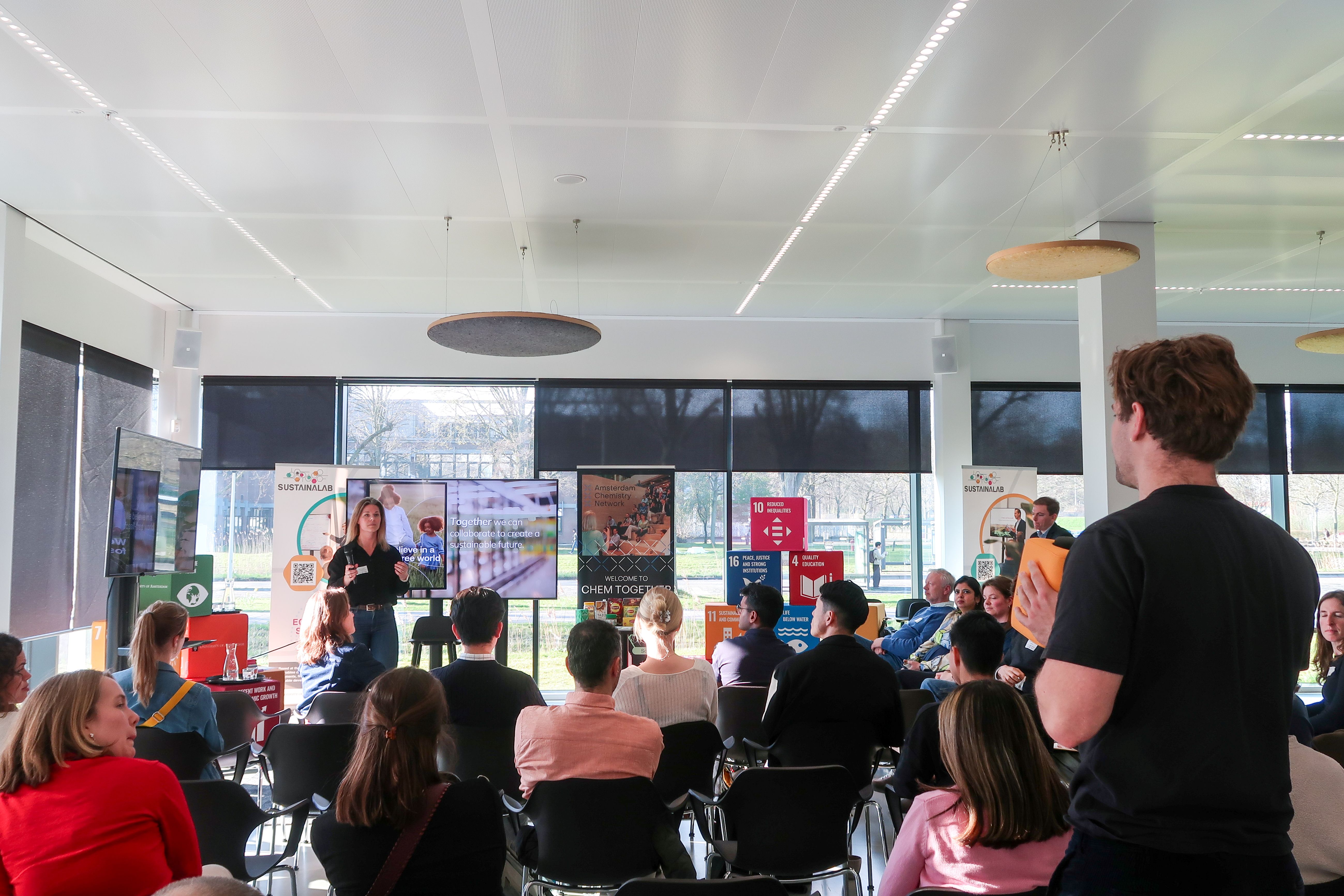
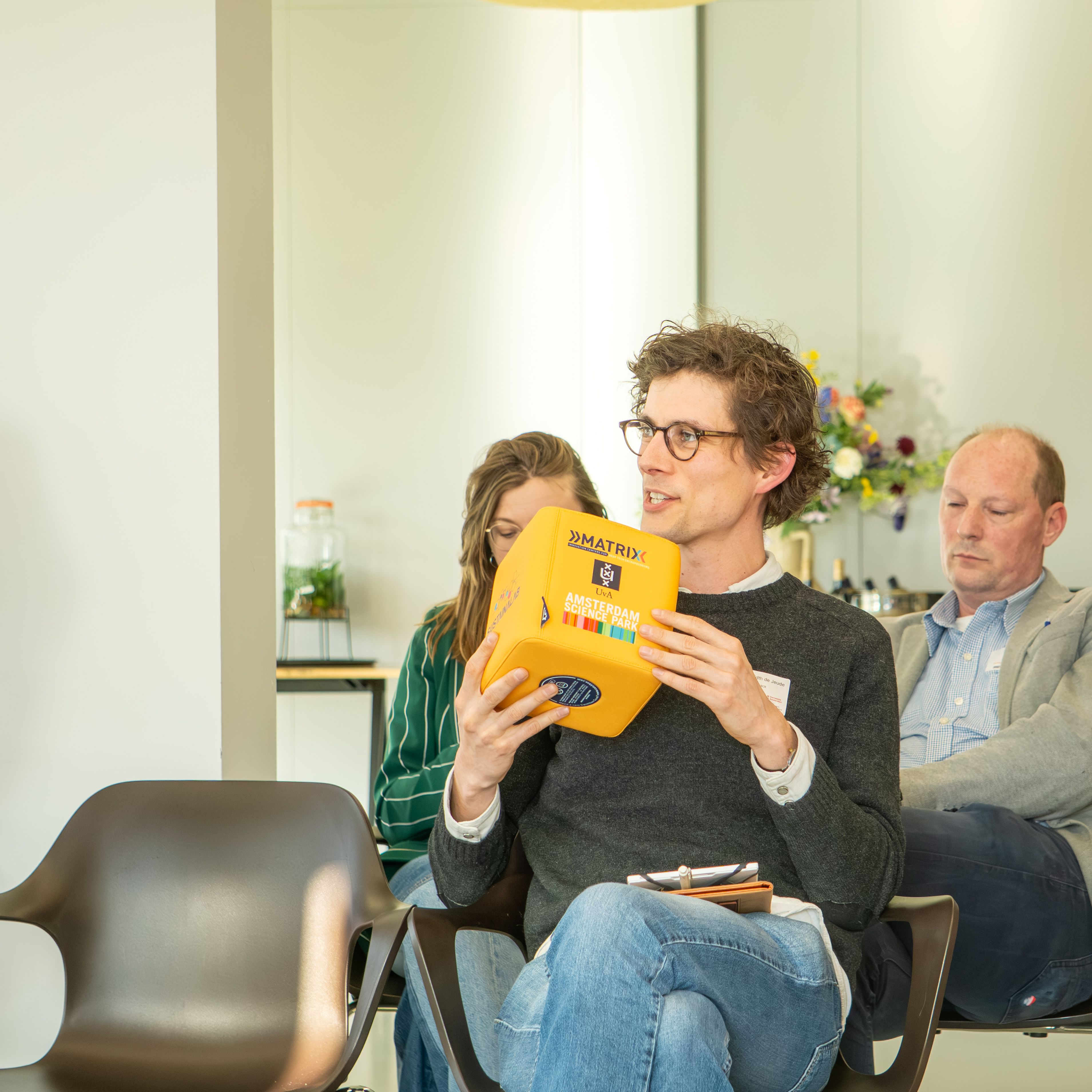
On March 19, Amsterdam Chemistry Network (ACN) and SustainaLab welcomed a diverse audience of researchers, startups, industry, and policymakers to Amsterdam Science Park for Chem Together #23.
The central question of the afternoon was simple, yet complex:
If the science is ready, why is sustainable packaging not scaling faster?
Setting the Stage
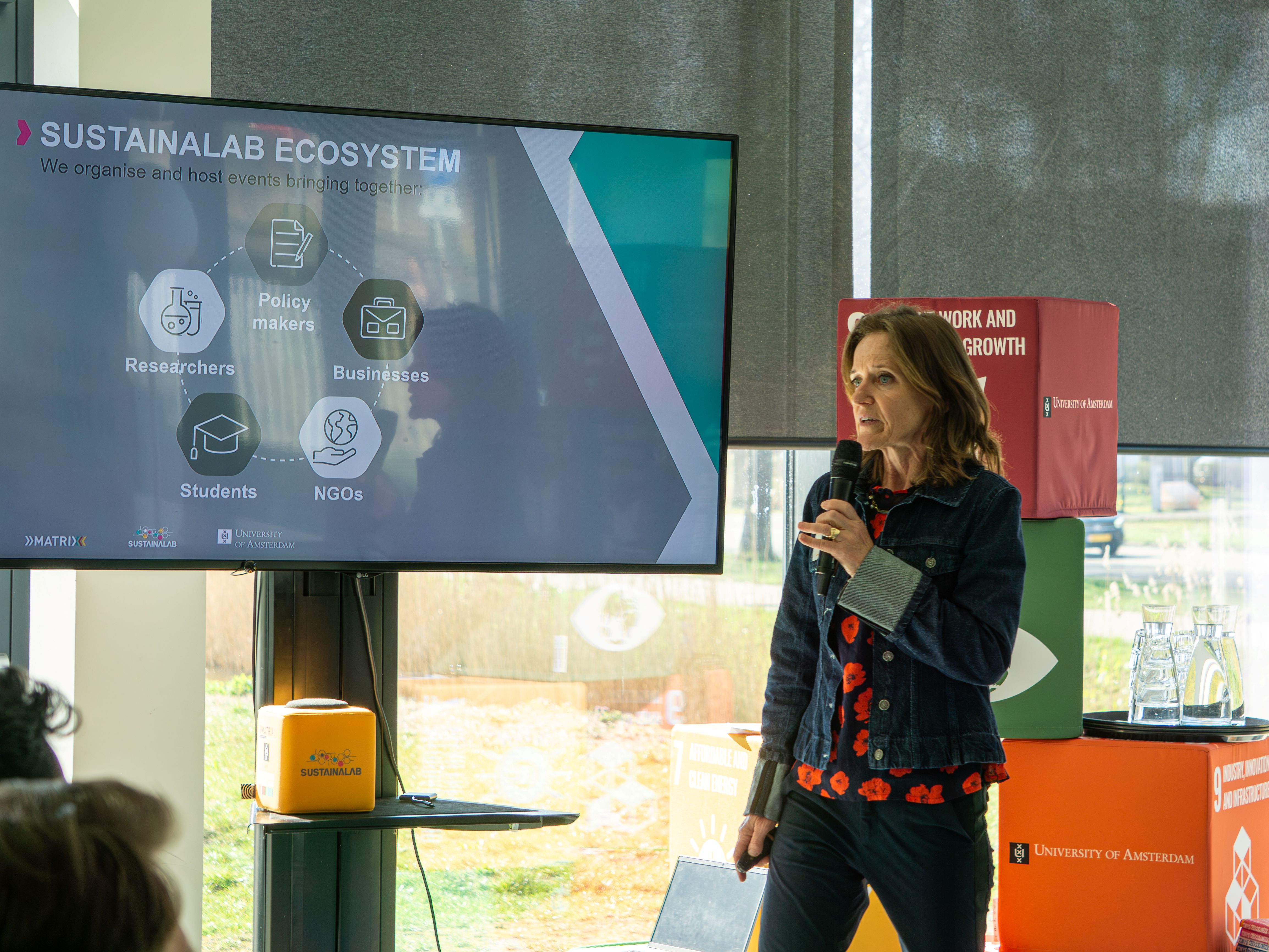
The afternoon started informally with a welcome coffee, followed by an introduction by Wendela van Asbeck from SustainaLab, who highlighted the growing ecosystem forming around the venue bringing together startups, researchers, and industry to accelerate sustainable innovation.
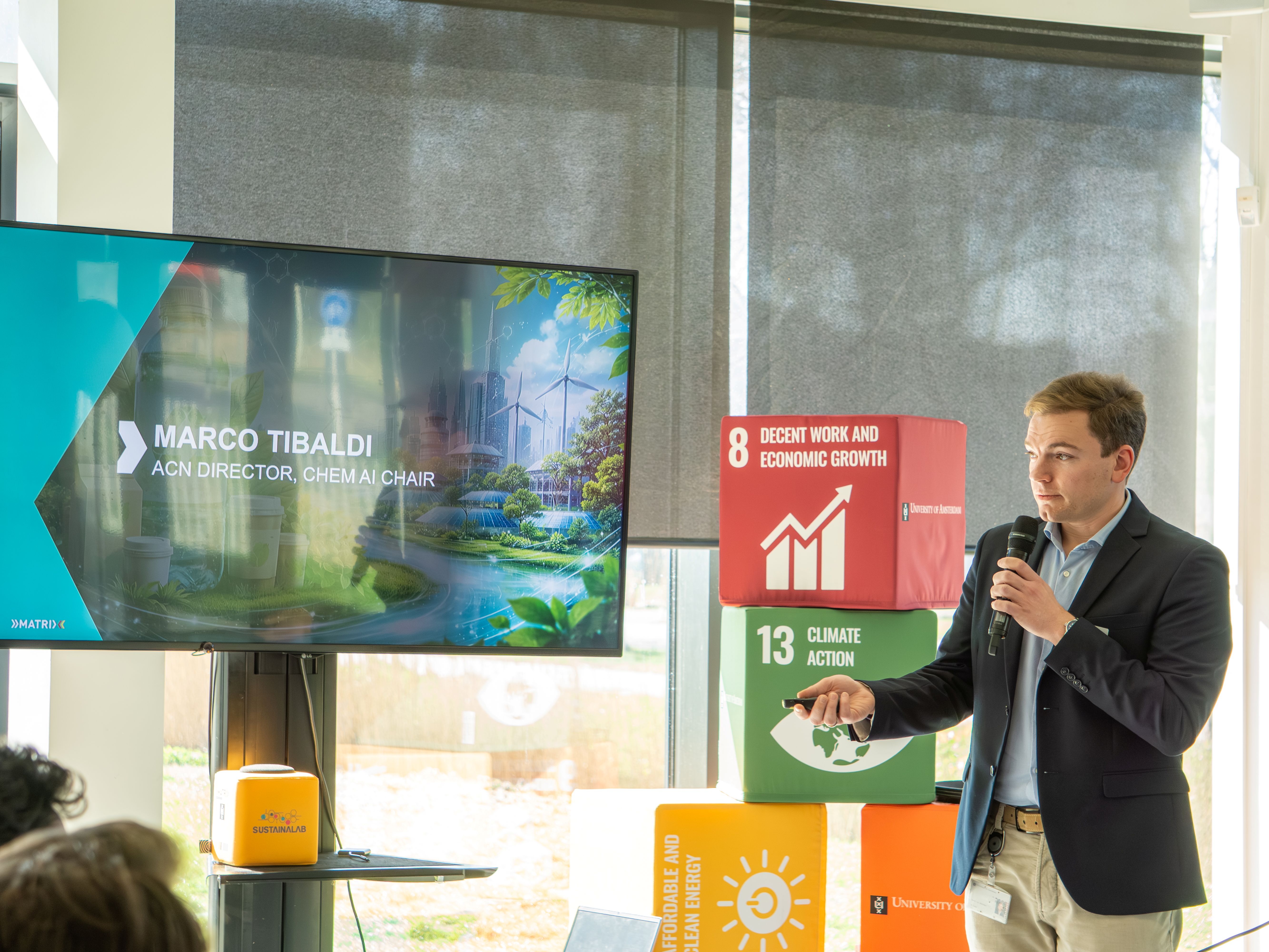
Marco Tibaldi (ACN) then introduced the activities of the network, with a particular focus on upcoming opportunities, including new calls from ChemistryNL and CircularPlasticsNL for public-private partnerships.
The host and moderator for the day, Rick Passenier, set the policy and funding context by presenting the Biobased Circular Growth Fund program, with a focus on subsidies supporting the development and scale-up of biobased polymers.
From Molecules to Materials
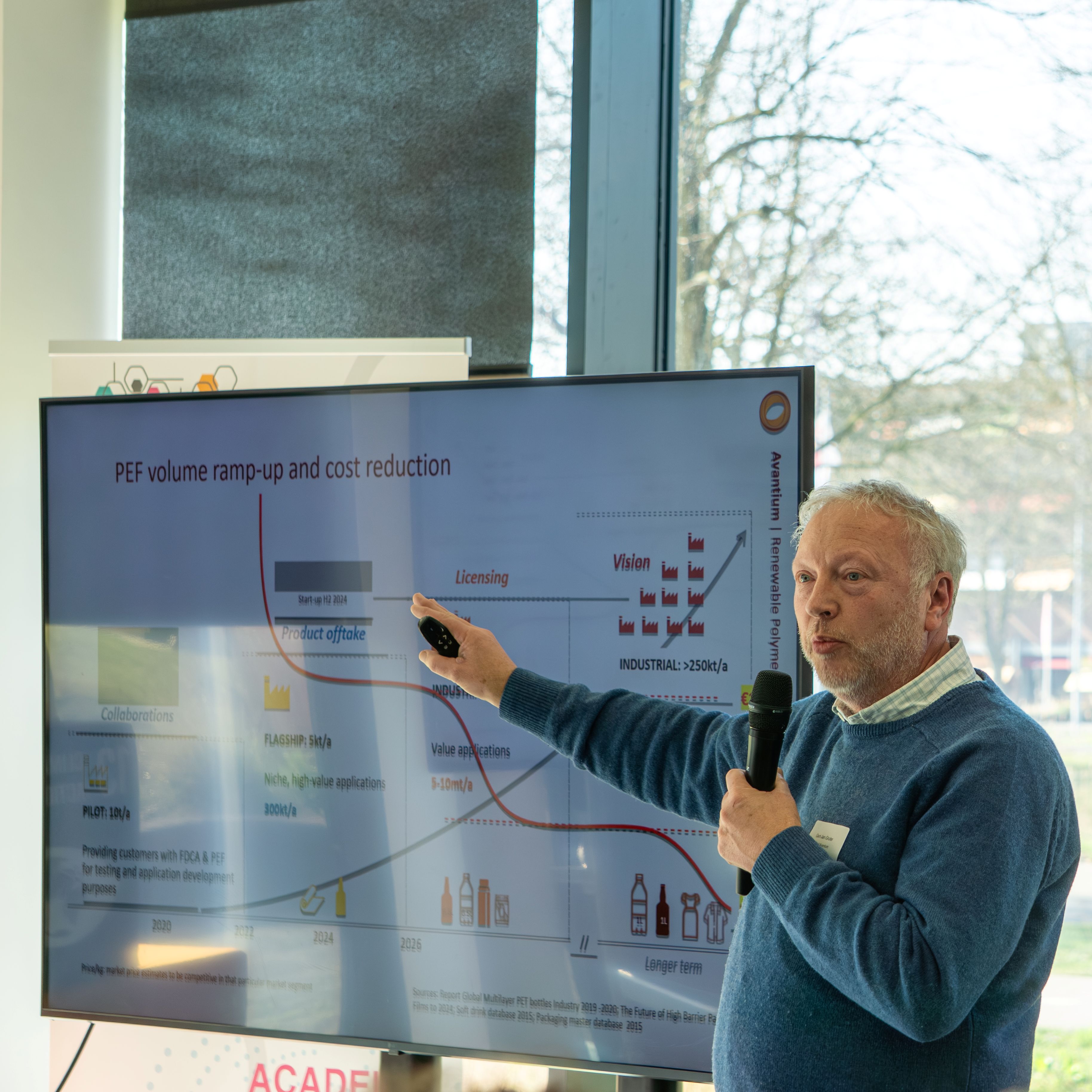
The first keynote by Prof. Gert-Jan Gruter (University of Amsterdam & Avantium CTO) set the scientific foundation. He framed packaging as a materials design challenge, highlighting that while innovation is advancing rapidly, success ultimately depends on performance.
A key insight from his talk was that new biobased plastics are growing significantly faster than traditional drop-in materials such as biobased PE, PET, and PP: a clear signal of momentum in the field. At the same time, this reinforces that competing on performance is essential for large-scale adoption.
Designing for Reality at Global Scale
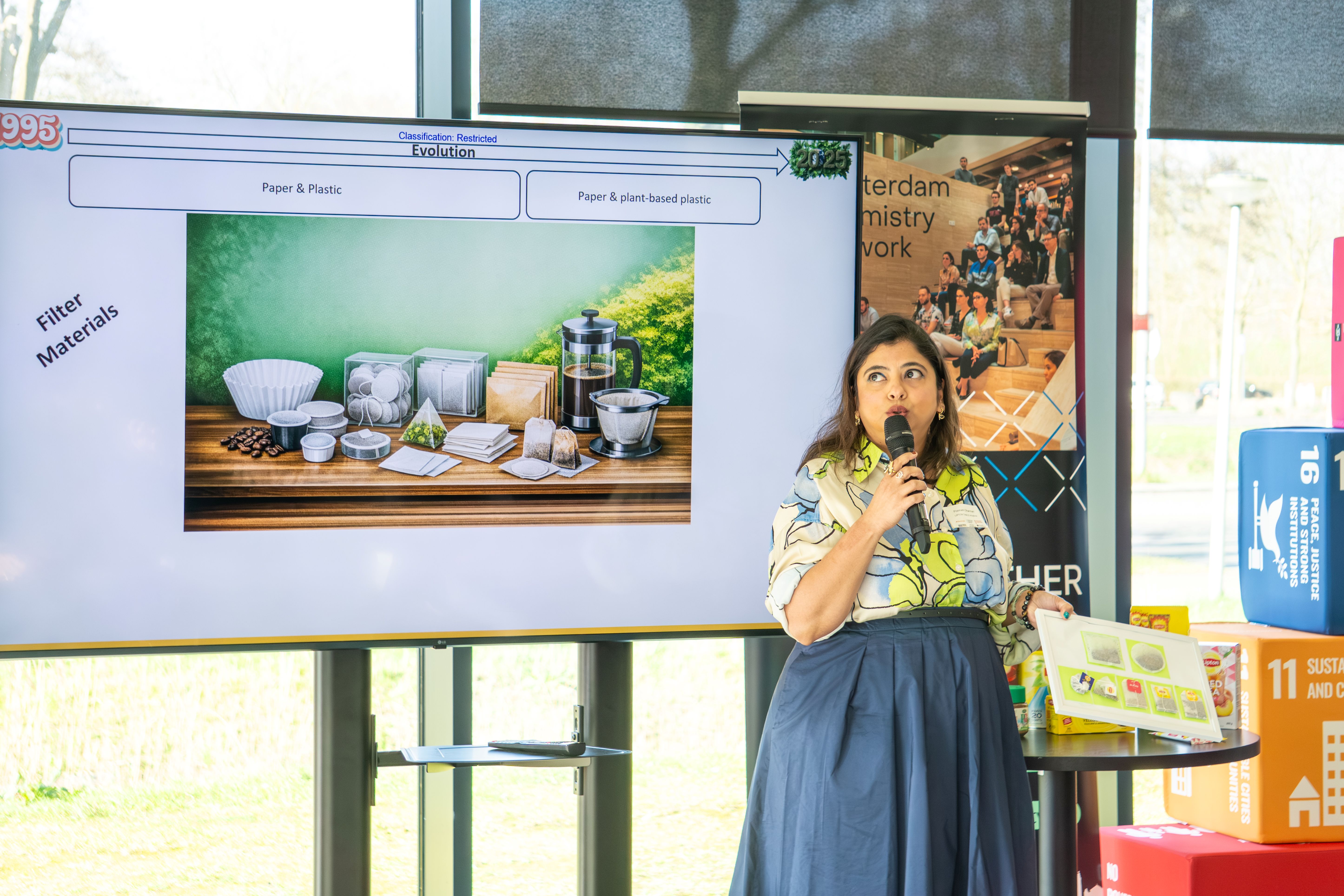
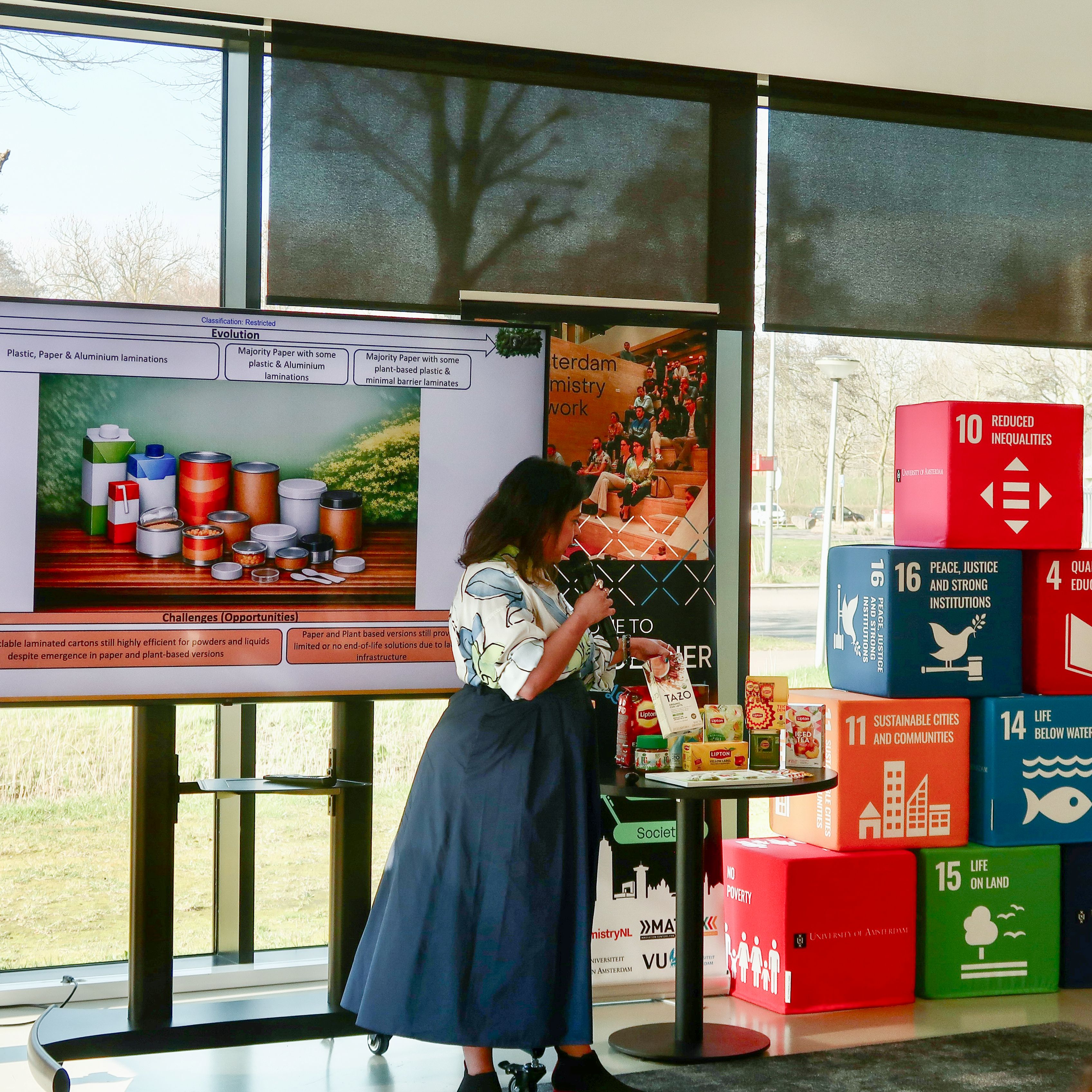
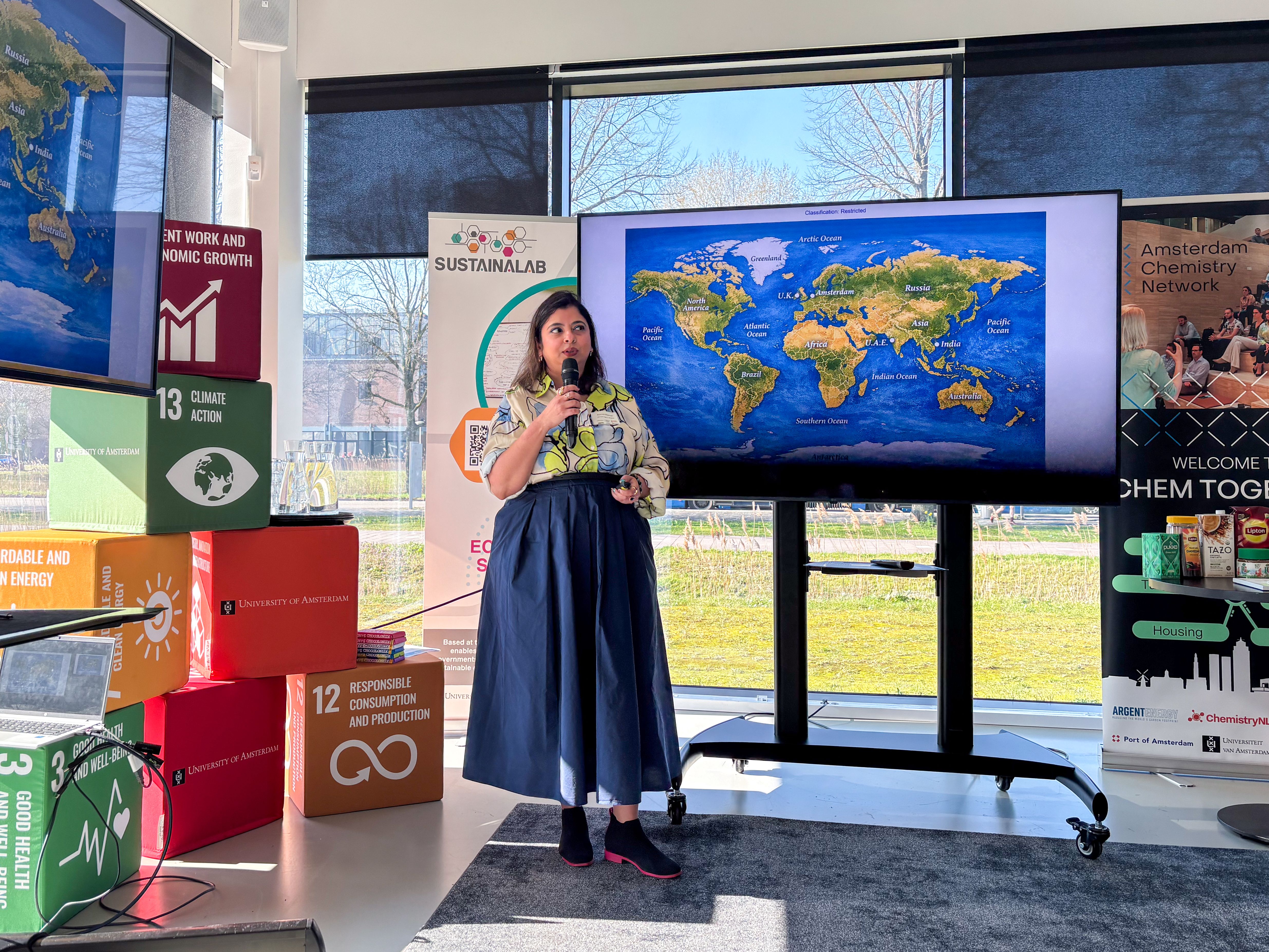
Poonam Dharman (Lipton Teas and Infusions) took the audience through the evolution of packaging, from flexible solutions to tin-based formats, illustrating how design has always been driven by performance, preservation, and consumer needs.
She highlighted the growing complexity of meeting sustainability targets while maintaining product integrity. For example, tea bags may need to be compostable, yet still meet strict shelf-life requirements.
Her global perspective also emphasized that while Europe is leading in sustainability efforts, other regions are not moving at the same pace, creating additional challenges for multinational companies operating across markets.
Innovation Meets Commercial Reality
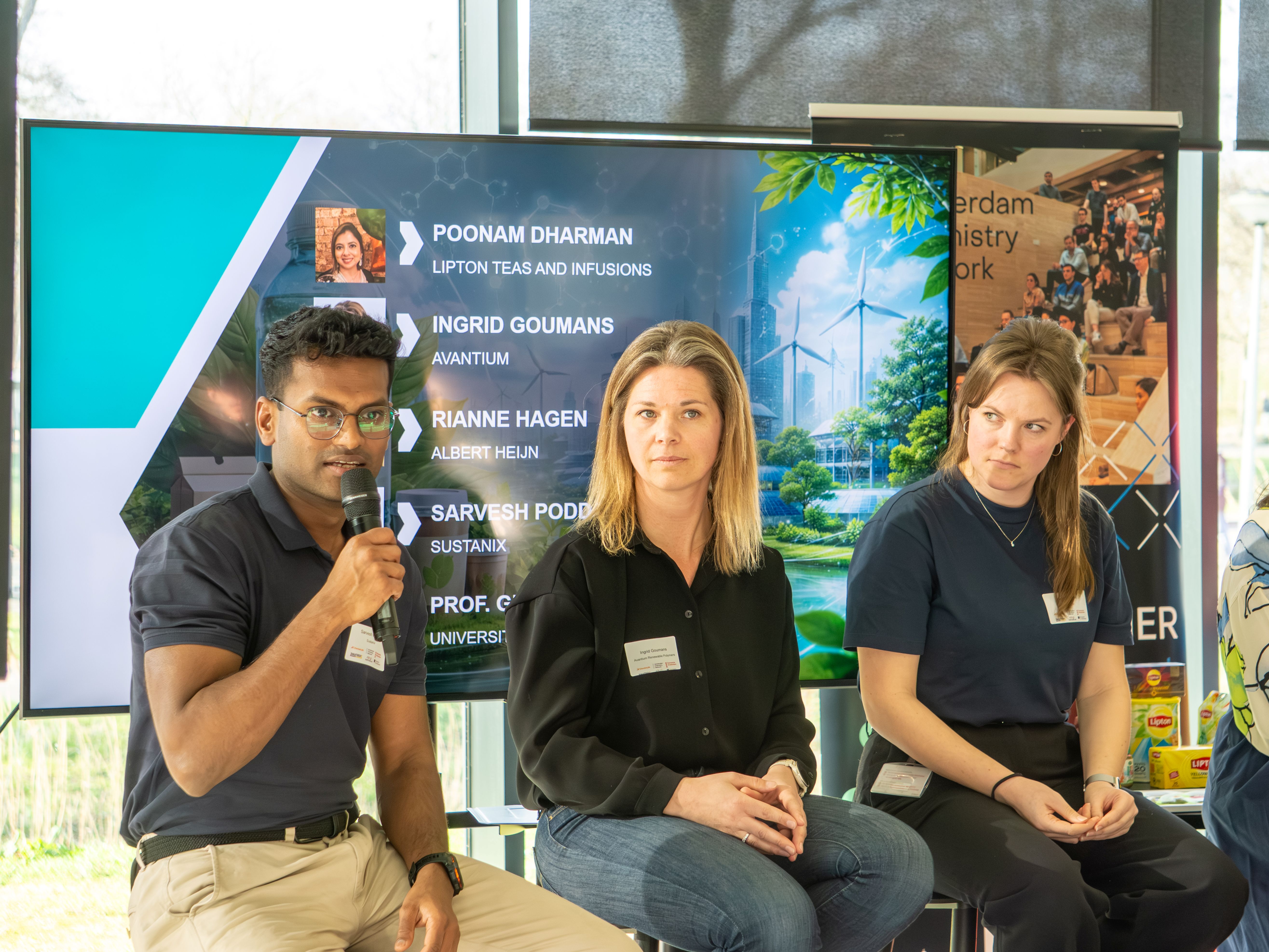
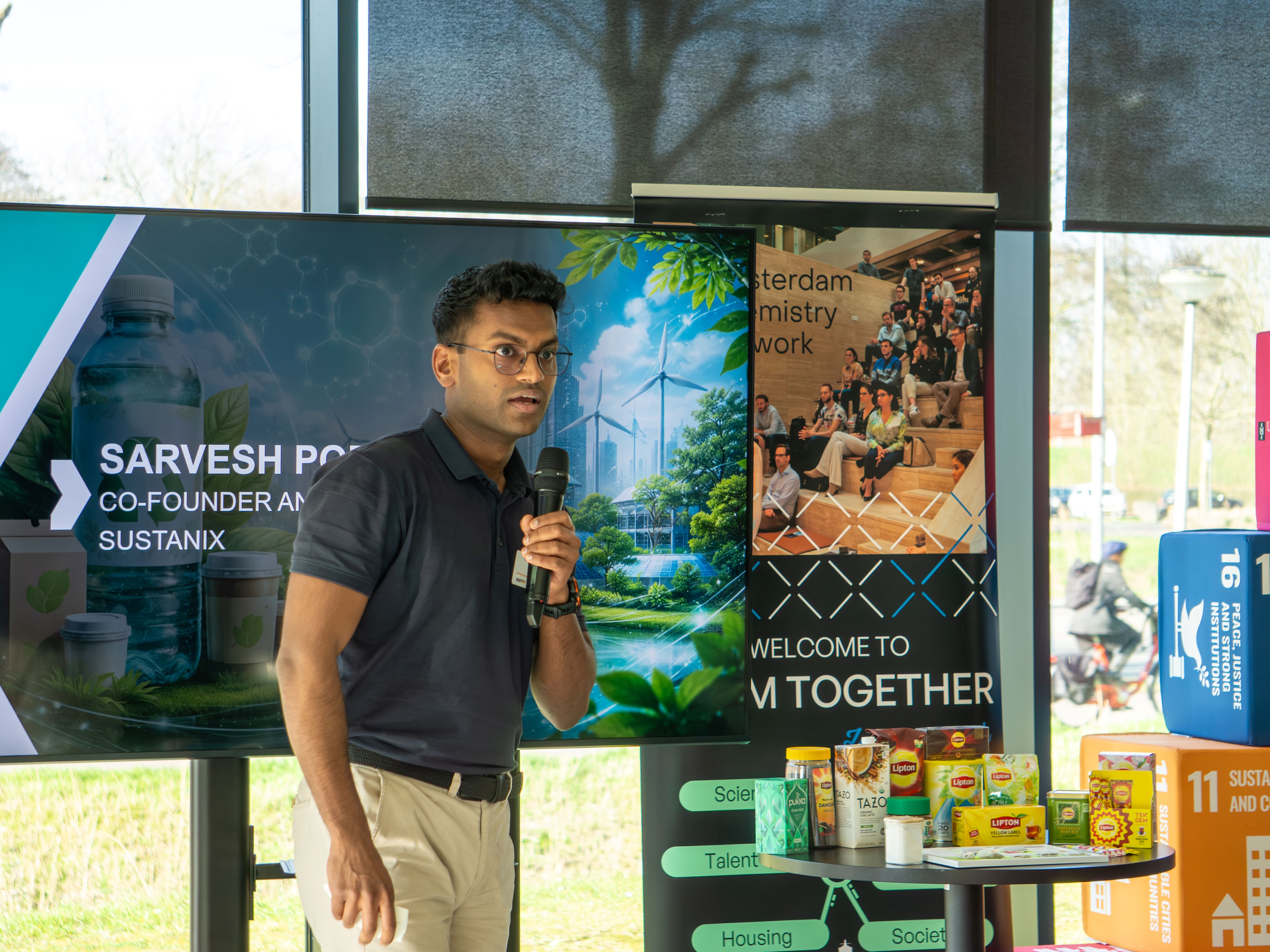
Sarvesh Poddar (Sustanix) shared the journey of a startup developing biobased coatings for paper packaging, aiming to replace conventional plastic barrier layers. His talk highlighted both the technical potential of such solutions and the importance of building commercial traction from day one.
His perspective reinforced a key theme of the day: innovation alone is not enough: market adoption must be developed in parallel.
Retail: Where Trade-Offs Become Real
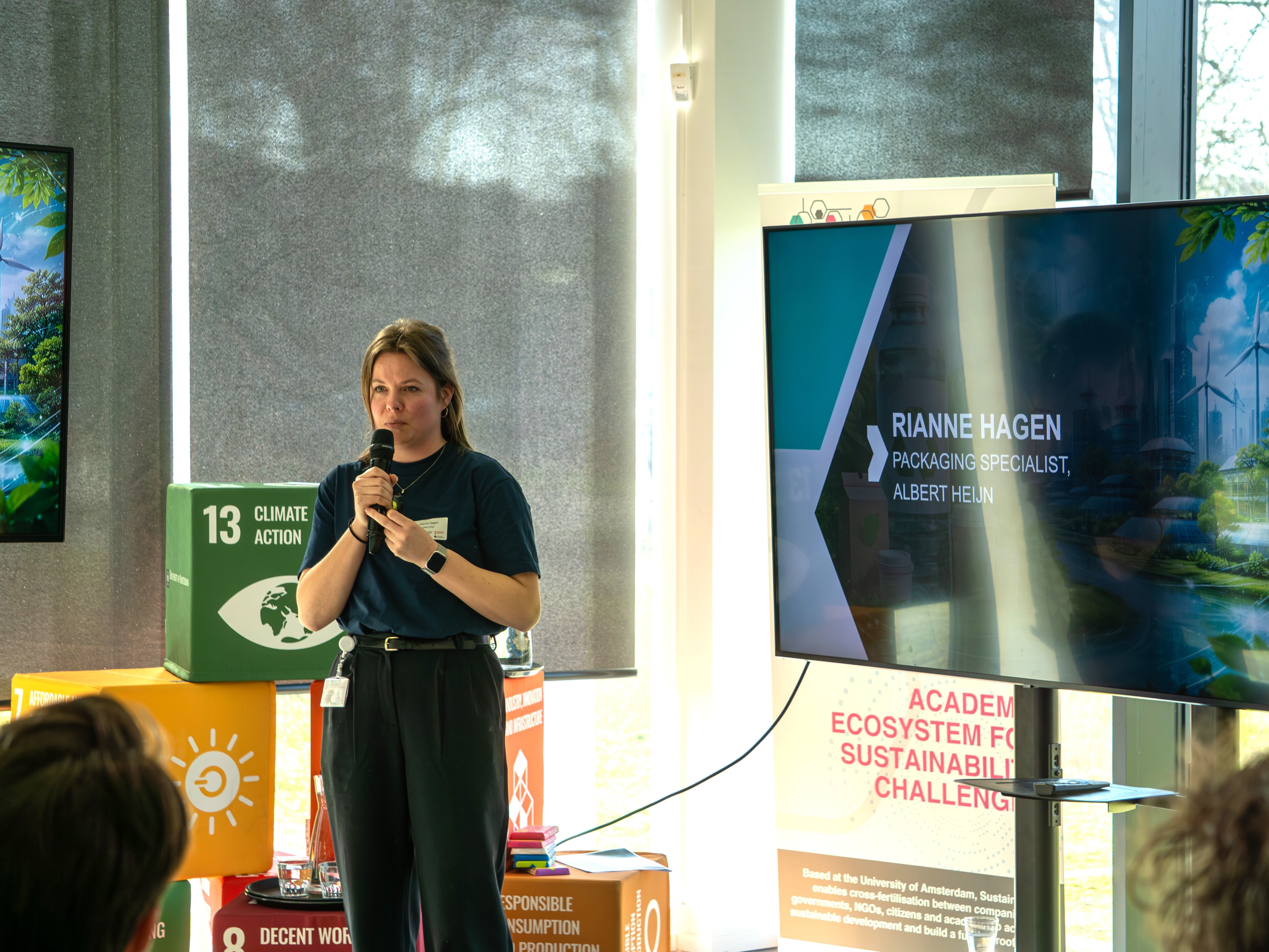
From a retail perspective, Rianne Hagen from Albert Heijn provided a grounded view of how packaging decisions are made in practice.
The presentation shared both successes, such as improvements in labeling and increased use of flexible packaging, and challenges. Notably, reuse solutions can negatively impact sales and competitiveness, while also introducing significant logistical complexity. With existing return systems for glass bottles and cans already at capacity, scaling additional reuse models remains difficult.
Scaling Innovation and the Valleys of Death
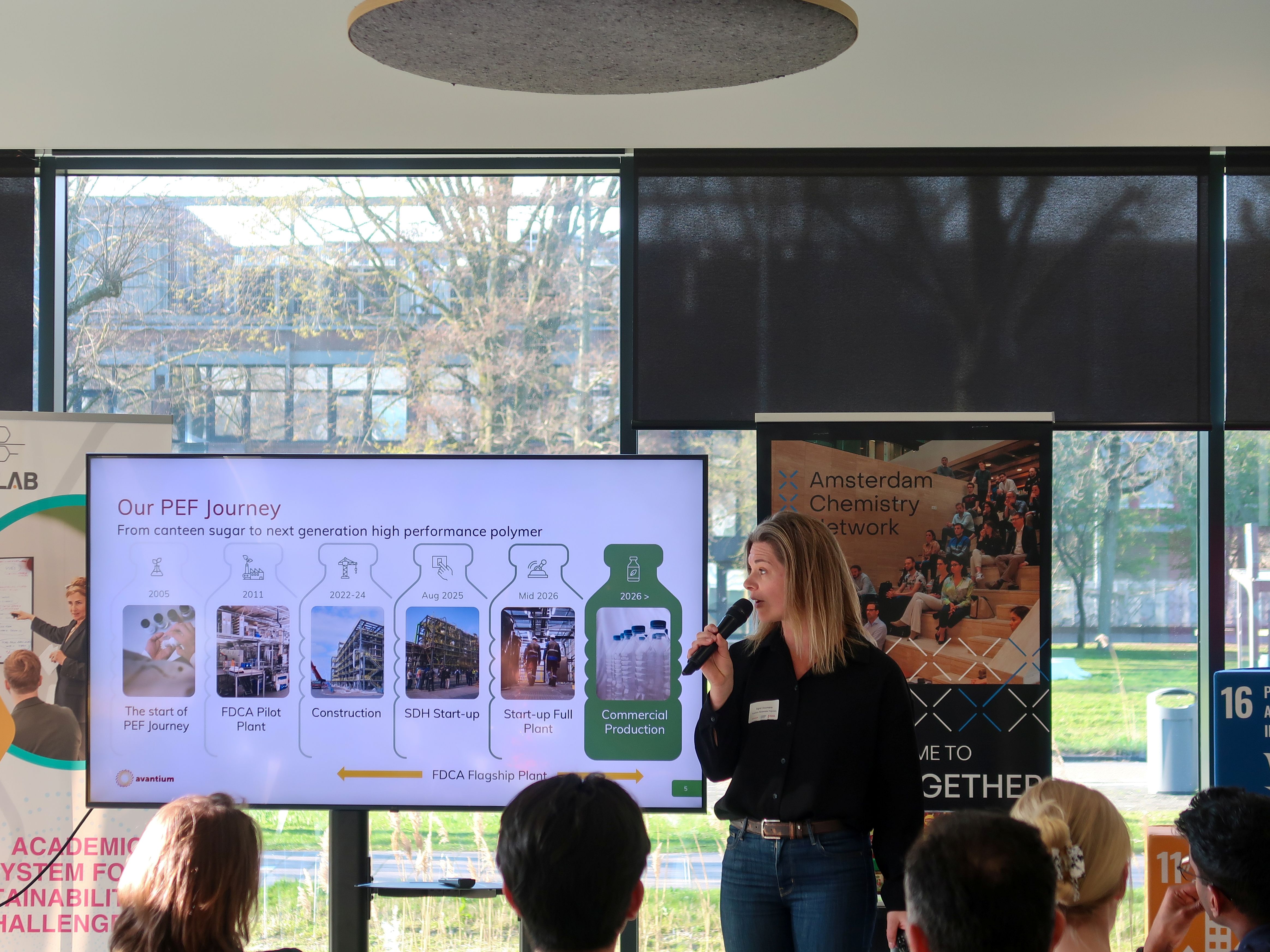
Ingrid Goumans (Avantium) addressed the critical challenge of scaling sustainable materials. She discussed the “valleys of death” that companies face when moving from innovation to industrial production, and how Avantium has adapted its business model along the way.
She also shared the progress toward the first production of biobased PEF, marking an important milestone for the industry.
A thought-provoking point raised during her talk was the scrutiny faced by biobased materials — for example, the use of sugar as a feedstock — while fossil-based alternatives are often not questioned to the same extent. This highlights the broader complexity of transitioning to new material systems.
Discussion and Closing
Across all talks, a common message emerged:
The challenge is not a lack of innovation, it is the complexity of implementation.
Technical performance, cost, infrastructure, policy, and consumer behavior all interact, making the transition to sustainable packaging a true systems challenge.
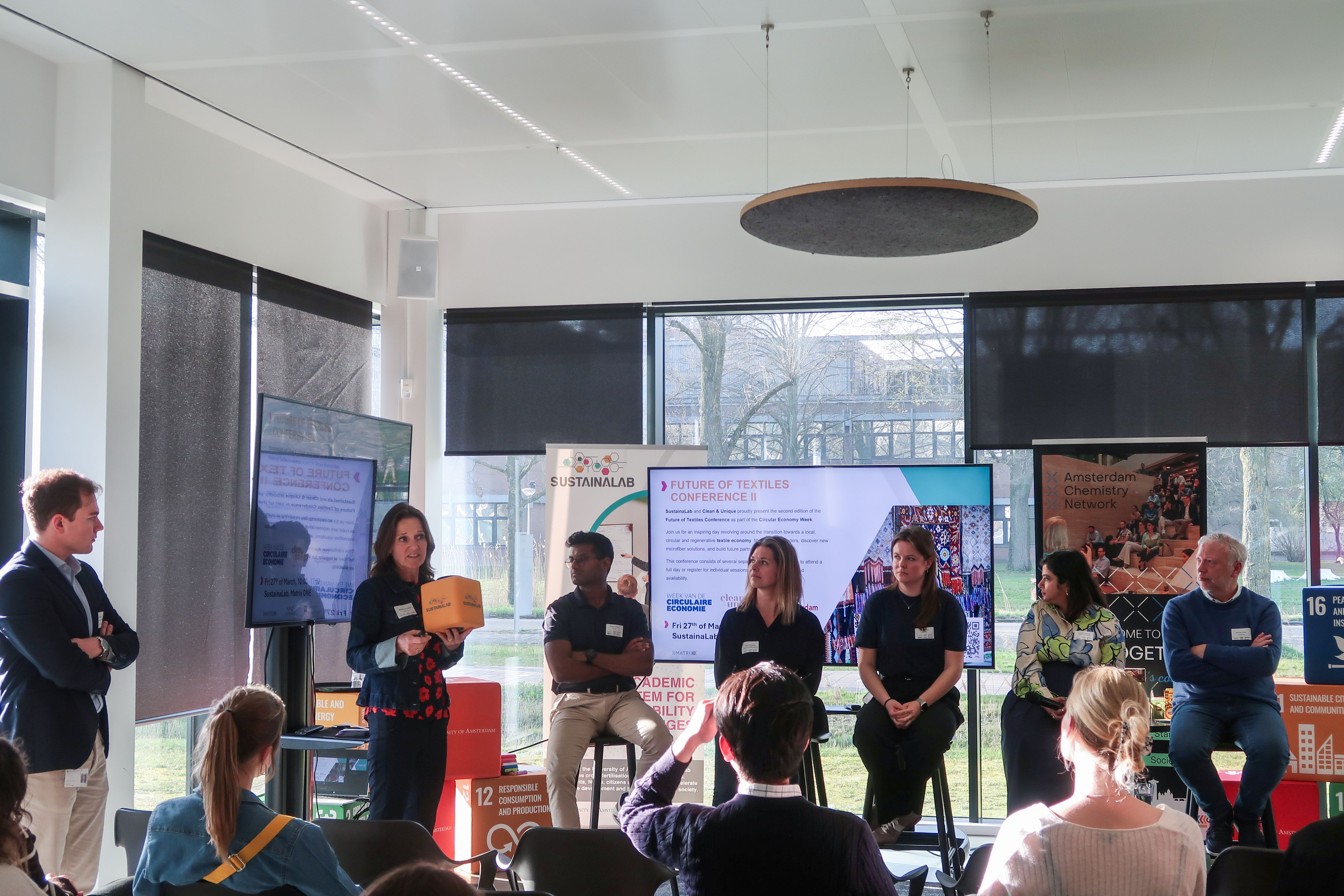
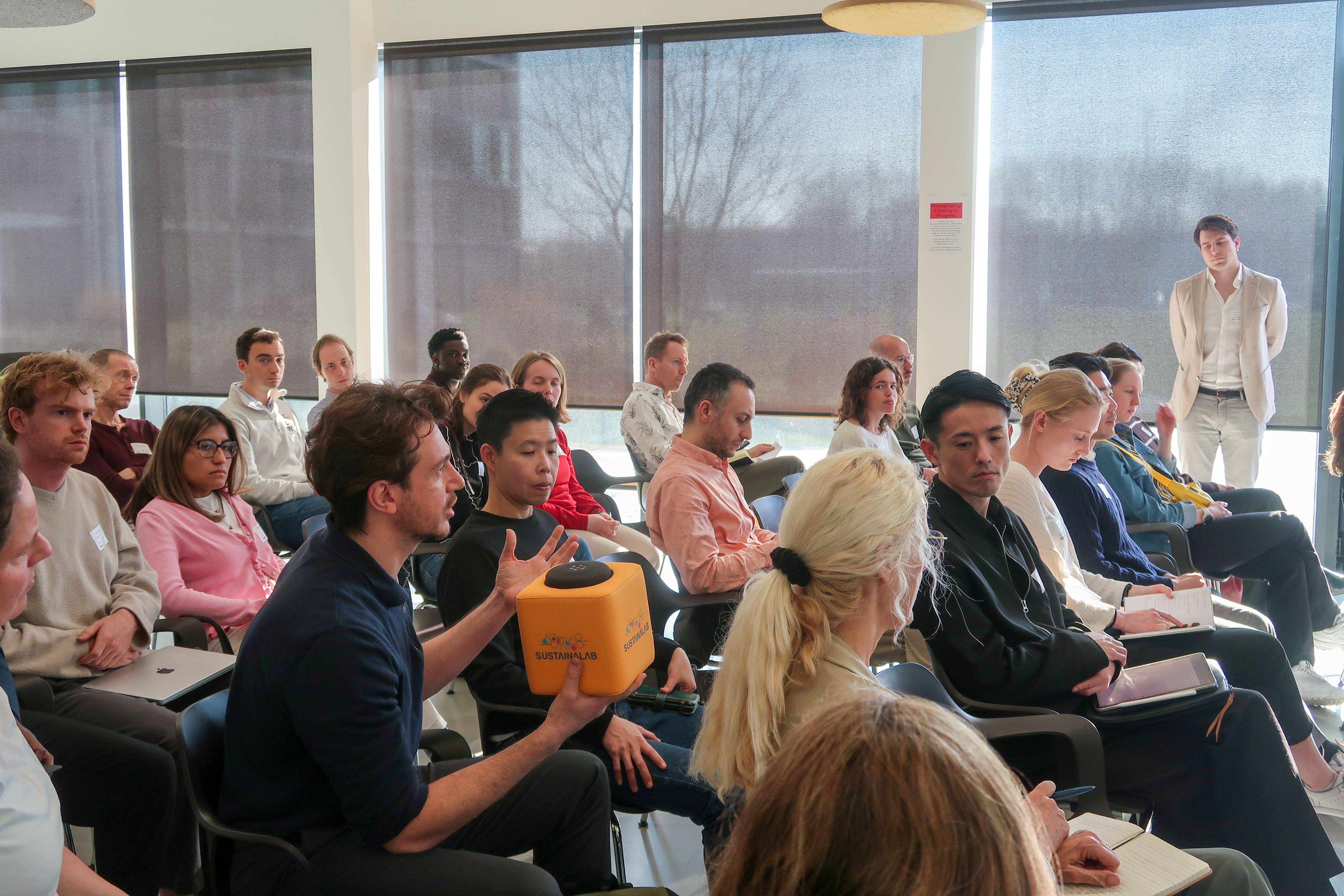
The event concluded with an engaging panel discussion, where speakers and audience members explored these challenges further, followed by networking drinks that continued the conversation.
We thank all the speakers, the attendees, and our co-organizers at SustainaLab, and acknowledge the support of City of Amsterdam and ChemistryNL.